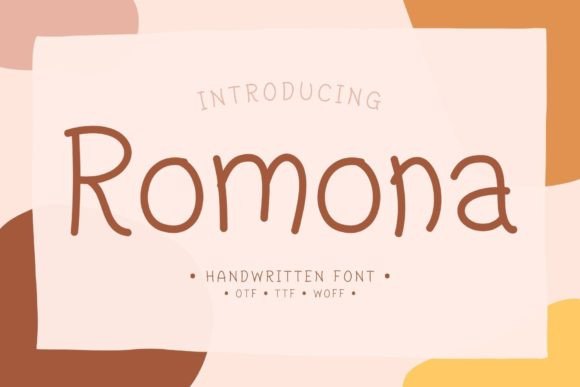
Why Romona Is the Handwritten Font Your Brand Needs
As a small business owner, I’ve learned that your brand identity isn’t just about your logo or your color palette. It’s about how you make people feel when they interact with your materials. One of the most powerful, yet often overlooked, elements of that experience is your typography. After testing dozens of typefaces for my own ventures, I found that Romona, a Script Handwritten font, offers a unique blend of authenticity and playfulness that can elevate everything from product labels to social media graphics.
If you are looking for a creative font that feels personal without sacrificing professionalism, Romona is worth considering. It bridges the gap between formal elegance and casual friendliness, making it suitable for almost any project you’re working on. Whether you run an online shop, a boutique café, or a service-based startup, the right handwritten font can help you look more consistent, recognizable, and trustworthy across real-world business touchpoints.
The Personality Behind Romona
Not all script fonts are created equal. Some are too stiff and corporate, while others are so chaotic they become unreadable. Romona strikes a beautiful balance. It has an authentic, hand-drawn quality that suggests care and attention to detail—traits customers value highly in small businesses. The strokes are fluid, and the letterforms have a natural rhythm that mimics genuine handwriting rather than a rigid digital simulation.
This visual appeal makes Romona perfect for brands that want to convey warmth and approachability. It’s not just a decorative element; it’s a voice. When you use Romona, you are essentially telling your audience, “We care about the little things.” This mood aligns perfectly with industries like handmade goods, wellness, lifestyle coaching, and artisanal food products. It adds a layer of modern typography that feels current yet timeless.
Real-World Applications for Small Businesses
One of the biggest challenges for entrepreneurs is maintaining consistency across different platforms. You need your branding to look good on a tiny Instagram thumbnail, a large website banner, and a physical product label. Romona handles these varied scales remarkably well. Here is how I recommend using this font in your daily business operations:
- Logo Design and Branding: Because of its playful yet structured nature, Romona works exceptionally well as a primary logo font for boutiques, bakeries, or creative agencies. It stands out in a sea of generic sans serif logos but remains legible enough to be memorable.
- Packaging Design and Product Labels: For sellers of candles, soaps, or baked goods, packaging is your silent salesman. Using Romona for the product name or tagline adds a premium, artisanal feel. It suggests that the item inside was made with love, which can justify higher price points and build customer loyalty.
- Social Media Graphics: In the crowded feed of Instagram or Pinterest, text overlays need to grab attention quickly. Romona serves as an excellent display font for quotes, announcements, or sale alerts. Its handwritten style breaks the monotony of standard block text, encouraging users to stop scrolling.
- Customer-Facing Materials: Thank-you cards, greeting cards, and invoice covers are where you solidify the relationship with your client. A simple note signed off with Romona feels significantly more personal than one typed in Arial or Times New Roman. It turns a transaction into a connection.
- Menus and Flyers: Café owners and event planners can use Romona for headings or special item descriptions. It adds character to printed materials without overwhelming the reader, especially when used sparingly alongside cleaner fonts.
Building Trust Through Consistent Typography
Consistency is key to building a professional image. When your website visuals, email headers, and physical mailers all use the same typeface family, you create a cohesive brand identity. This repetition helps customers recognize your business instantly. If you pair Romona with a clean, neutral background, it becomes the star of the show, drawing the eye exactly where you want it.
However, readability is crucial. While Romona is expressive, it should not be used for long blocks of body text. Its best role is as a headline, logo, or accent font. For supporting information like terms and conditions, detailed descriptions, or navigation menus, you need something easier to scan. This brings us to the importance of font pairing.
Effective Font Pairing Strategies
To maximize the impact of Romona, pair it with a complementary typeface. The golden rule of design is contrast. Since Romona is a Script Handwritten font with organic curves, it pairs beautifully with geometric sans serif fonts or classic serif fonts.
For example, if you are designing a menu, use Romona for the dish names (headlines) and a clean sans serif font for the ingredients and prices (body text). This combination ensures that your brand looks stylish but also functions efficiently. Similarly, for web design, using Romona for H1 tags and a readable sans serif for paragraphs creates a hierarchy that guides the user’s eye naturally. This strategic use of a creative font alongside a functional one ensures your message is both attractive and accessible.
Testing Before You Commit
Before applying Romona to your entire brand kit, I strongly advise testing it in context. Screenshots can be deceiving. Print out mockups of your business cards, product labels, and social media posts. View them at actual size. Does the font hold up on a small sticker? Is it still legible on a mobile screen? Does it clash with your existing colors?
Experiment with different weights and sizes. Sometimes, a slightly larger point size can make a handwritten font feel more elegant and less casual. By testing these variables, you ensure that Romona enhances your brand rather than distracting from it. This practical approach saves time and prevents costly reprints or redesigns later on.
Commercial Licensing Matters
Finally, as a business owner, it is vital to respect intellectual property rights. Not all fonts are free for commercial use. Before using Romona on products, packaging, templates, merchandise, or client work, always check the commercial font licensing agreement. Many premium font creators offer specific licenses for small businesses, startups, and digital downloads. Ensuring you have the proper license protects your business from legal issues and supports the designers who create these valuable design assets.
In summary, Romona is more than just a pretty typeface. It is a tool for communication. By integrating this Script Handwritten font into your marketing materials, packaging, and digital presence, you add a layer of personality and professionalism that resonates with your target customers. It helps you stand out in a noisy market by showing the human side of your brand. Whether you are launching a new line of handmade jewelry or rebranding your coaching services, Romona provides the authentic touch needed to connect deeply with your audience.