Hello Sintha: A Handwritten Font for Authentic Brand Storytelling
I remember the exact moment I realized my brand was losing its soul. I was staring at a stack of newly printed thank-you cards for my small online shop, and they looked... sterile. The text was clean, sure, but it felt cold. It didn’t match the warmth of the handmade products inside the box. As a small business owner, I’ve learned that your typography is often the first handshake you offer a customer before they even touch your product. That day, I decided to overhaul my visual identity, and that search led me to Hello Sintha, a Script Handwritten font that completely changed how I communicate with my audience.
If you are a creative consultant, an entrepreneur, or someone who sells directly to consumers, you know that consistency is king. But consistency doesn’t have to mean boring. It means showing up every day with a voice that sounds like you. Hello Sintha is not just another decorative typeface; it is a personality-driven design asset that brings a human touch to digital and print materials alike. In this review, I’ll walk you through how this font performed in real-world branding scenarios, from product labels to social media graphics, and why it might be the missing piece in your brand identity puzzle.
First Impressions: The Personality of Hello Sintha
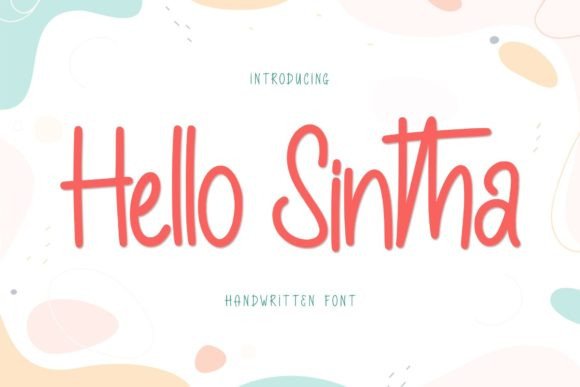
When you first open the file folder for Hello Sintha, the vibe is immediate. It falls squarely into the category of a premium handwritten font, but it avoids the chaotic energy of some script fonts that can feel messy or hard to read. Instead, it offers a relaxed, friendly, and slightly playful character. The strokes mimic natural penmanship, complete with subtle variations that suggest a human hand rather than a rigid computer algorithm.
For a small business, this distinction is crucial. Customers today crave authenticity. They want to buy from people, not faceless corporations. This creative font captures that sentiment perfectly. Whether you are designing a logo for a boutique clothing line or creating a banner for an upcoming sale, Hello Sintha feels approachable. It invites the viewer in. It says, "I made this with care," which is exactly the message every artisan and service provider wants to convey. Its visual character strikes a balance between professional polish and casual charm, making it versatile enough for various industries without feeling out of place.
Real-World Application: From Packaging to Digital Ads
The true test of any typeface is how it holds up under pressure. I put Hello Sintha to the test across several key areas of my business, and here is what I found regarding its performance on different mediums.
- Product Labels and Packaging: One of the most challenging aspects of e-commerce is packaging. You need text that is legible on small surfaces but still impactful. I used Hello Sintha for the front labels of my candle jars. Because it is a display font with strong letterforms, it remained readable even when scaled down. It added a layer of sophistication that plain sans serif fonts lacked, making the product look gift-ready right off the shelf.
- Social Media Graphics: On Instagram, your feed is your storefront. I updated my templates to feature Hello Sintha for headlines and short phrases. It stands out against busy background images because of its distinct curves. However, I learned quickly that it works best as a headline font rather than body copy. Using it for long paragraphs on mobile screens reduced readability significantly. For supporting text, I paired it with a clean sans serif font, which created a beautiful contrast and kept the information easy to digest.
- Thank-You Cards and Inserts: This is where the font truly shined. I redesigned my thank-you notes using Hello Sintha for the main greeting. The handwritten style made the note feel personal, like a letter from a friend rather than a mass-produced insert. It increased the perceived value of the unboxing experience, encouraging customers to share photos online—a huge win for organic marketing.
- Website Banners and Flyers: When refreshing my website’s homepage banner, I wanted a modern typography style that felt current. Hello Sintha provided that editorial design flair. It drew the eye immediately to the call-to-action. Just ensure you check the included styles and weights; having access to bold variants helps create hierarchy within your web design.
Strategic Font Pairing and Readability Tips
One common mistake beginners make is letting a single font do all the heavy lifting. While Hello Sintha is charming, it is primarily designed for headlines, logos, and decorative accents. To build a cohesive brand identity, you need to pair it strategically. My go-to combination is Hello Sintha with a simple, geometric sans serif font. The clean lines of the sans serif provide stability and readability, while the script adds the emotional hook.
Alternatively, if you are working in a more elegant niche, such as high-end skincare or luxury wedding invitations, pairing it with a classic serif font can create a timeless look. The contrast between the structured serif and the fluid handwritten font creates visual interest without clashing. This technique, known as font pairing, is essential for maintaining visual consistency across all your design assets.
Readability is non-negotiable. When using Hello Sintha on small labels, sticky tags, or thumbnails, keep your text short. Avoid complex ligatures if the size is too small. Always preview your designs on actual devices. What looks great on a large desktop monitor might become illegible on a smartphone screen. Test your color contrasts carefully; dark gray text on white paper or white text on dark backgrounds usually works best for this type of script.
Technical Details and Commercial Licensing
Before you start slapping this font on merchandise, there are practical considerations to keep in mind. First, always verify the commercial font licensing. If you plan to use Hello Sintha on products you sell, such as t-shirts, mugs, or digital downloads, you typically need a commercial license. Using a free version for commercial purposes can lead to legal issues that hurt your small business reputation.
Check the file formats included in your download. Most premium fonts come in .OTF and .TTF formats, which are compatible with Adobe Creative Cloud, Canva, and other major design software. Look for features like alternates and ligatures. These small details allow you to customize letters for a more polished look. For example, some handwritten fonts include special characters for ampersands or specific punctuation marks that enhance the overall aesthetic.
Additionally, consider multilingual support if you have an international audience. Not all handwritten fonts support extended character sets needed for languages other than English. If your brand speaks multiple languages, ensure the typeface includes the necessary glyphs to maintain consistency across translations.
Why Typography Matters for Small Business Growth
We often underestimate the power of words, but in design, we must also underestimate nothing about the power of the words’ shape. Typography affects first impressions, brand perception, and customer engagement. A well-chosen font like Hello Sintha signals that you pay attention to detail. It suggests that you care about the customer experience from the moment they see your ad to the moment they open their package.
Consistency builds trust. When your Instagram posts, your email newsletters, your physical packaging, and your website all speak the same visual language, customers subconsciously recognize your brand. They feel secure in their purchase because everything feels intentional and professional. Hello Sintha provides that recognizable voice. It helps transform a generic online store into a memorable brand story.
In conclusion, if you are looking to inject personality into your brand without sacrificing professionalism, Hello Sintha is a strong contender. It is flexible, expressive, and user-friendly. Whether you are a seasoned designer or a DIY business owner, this Script Handwritten font can elevate your materials from ordinary to extraordinary. Take the time to experiment with it, pair it wisely, and let it help tell your unique business story.